






At Floyd & Green Fine Jewelers, we know that repairing an older piece of jewelry is about more than simply fixing what is broken. The goal is to preserve the beauty and character of the original piece while making sure it is safe to wear and enjoy. With proper care and professional attention, many vintage and antique pieces can continue to be treasured for generations.
The Difference Between Vintage and Antique
Before discussing repairs, it helps to understand what makes vintage and antique jewelry different from modern jewelry. While the terms are sometimes used interchangeably, they generally refer to jewelry from different periods. Antique jewelry is typically considered to be at least 100 years old, while vintage jewelry generally refers to pieces that are several decades old but not yet considered antique.Jewelry from different eras was often created using distinctive techniques, materials and design styles. Georgian jewelry, for example, may feature hand-crafted details and gemstones set using techniques very different from those used today. Victorian jewelry is known for its romantic and symbolic designs, while Art Nouveau jewelry often incorporates flowing lines and nature-inspired motifs. Edwardian jewelry is recognized for delicate platinum work and intricate details, and Art Deco pieces frequently feature bold geometric patterns and contrasting gemstones. Retro jewelry, created during the 1930s and 1940s, often has a distinctive sculptural quality and incorporates yellow and rose gold.
Knowing the era and construction of a piece can help a jeweler determine the safest way to care for and repair it.
Inspect Your Jewelry Before Wearing It
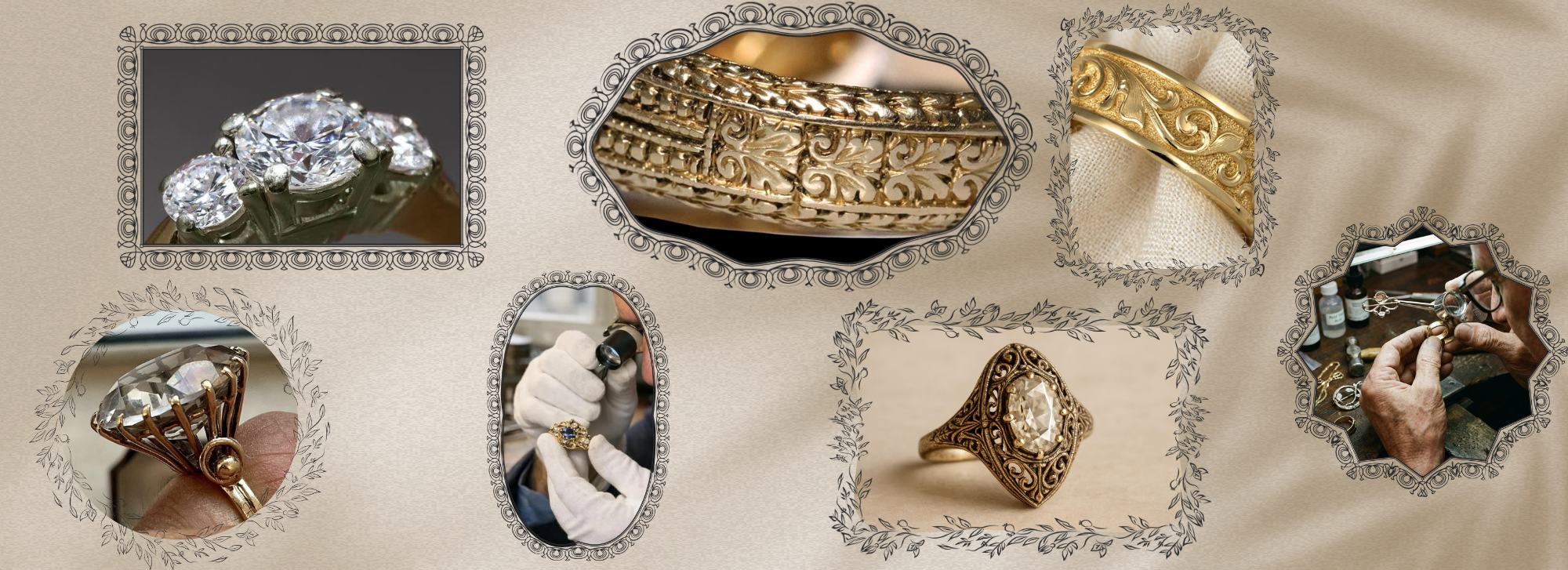
One of the best ways to protect vintage and antique jewelry is to have it inspected regularly. Older pieces have often experienced decades of wear, and even jewelry that looks perfectly fine many have areas that have weakened over time.Pay particular attention to gemstone settings, prongs, clasps, hinges and areas where metal comes into contact with other surfaces. Prongs can become thin or worn, allowing a gemstone to become loose. Clasps can weaken and eventually fail, while chains can develop thin areas from repeated wear.
Rings deserve special attention because they are constantly exposed to everyday activity. The bottom of a ring shank can gradually become thinner after years of contact with surfaces. If the metal becomes too thin, the ring may eventually crack or break. A professional inspection can identify these issues before they turn into a more significant repair. If you notice that a gemstone moves, a clasp doesn’t close securely or a piece feels different than it did previously, stop wearing it until it can be examined by a professional jeweler.
Cleaning Vintage and Antique Jewelry
Cleaning jewelry may seem simple, but older pieces can require a more careful approach. Not every vintage or antique piece should be cleaned using the same methods as a modern diamond ring.Some antique jewelry contains delicate gemstones or materials that can be affected by heat, chemicals, moisture or ultrasonic cleaning. Certain gemstones may be porous or fragile, while some antique settings may have delicate construction that cannot tolerate aggressive cleaning. Older pieces may also have finishes, patina or other characteristics that are part of their original appearance.
This is why it is important to have an older piece evaluated before cleaning it. A professional jeweler can identify the gemstones and construction and recommend an appropriate cleaning method. In some cases, gentle hand cleaning may be the safest option.
Regular professional cleaning can also provide an opportunity to identify potential problems. What begins as a routine cleaning appointment can sometimes reveal a worn prong, loose stone, weakened clasp or other issue that should be addressed.
Repairs Require Specialized Care
Repairing vintage and antique jewelry is often different from repairing contemporary jewelry. Older pieces may have been handmade or constructed using techniques that are no longer commonly used. Some may contain extremely delicate metal work or intricate details that require special consideration.The objective of a good repair is not necessarily to make an antique piece look brand new. Instead, the repair should restore its strength and function while preserving as much of the original craftmanship as possible. For example, an antique ring may need a worn prong replaced or a thin shank reinforced. A jewelry must consider how the repair will interact with the original metal and design. Replacing a component with a modern-looking part may solve the immediate problem but could alter the appearance or character of the piece.
This is particularly important when repairing heirloom jewelry. The sentimental and historical value of the piece may be just as important as its monetary value.
Preserve the Original Details
One of the greatest pleasures of vintage and antique jewelry is discovering the details that distinguish it from modern designs. Hand-engraving, milgrain, filigree, pierced metal work, unusual gemstone cuts and period-specific settings all contribute to a piece’s identity.When an older piece is repaired or polished, these details should be treated carefully. Excessive polishing can remove metal and soften engravings or other decorative elements. Delicate filigree can also be damaged if handled improperly. For this reason, restoration should be approached thoughtfully. Sometimes preserving a little of the jewelry’s natural age and character is preferable to making every surface look completely new. A small amount of patina or evidence of age can be part of what makes a vintage piece special.
Be Careful with Gemstones
Older jewelry may also contain gemstones that require special consideration. Gemstones used in antique jewelry can differ from the stones commonly used contemporary pieces, and some may have been treated or mounted in ways that require additional care.Certain antique gemstones may also show signs of wear from decades of use. Small chips, scratches, abrasions or changes in the setting can sometimes be difficult to see without magnification
Before having a vintage or antique repaired, it is helpful to have both the gemstones and the setting evaluated. A jeweler can determine whether a stone is secure and whether the setting provides adequate protection.
Know When to Take It Off
Even a beautifully restored antique piece may not be suitable for every activity. Vintage and antique jewelry should generally be removed before exercising, swimming, gardening, cleaning or participating in activities that could expose it to chemicals, impact or excessive pressure.Household cleaners and other chemicals can damage certain metals and gemstones. Physical activity can also place stress on delicate settings, chains, clasps and older metalwork. It’s also a good idea to remove delicate jewelry before going to sleep. Repeated pressure, pulling and contact with bedding can put unnecessary stress on older pieces.
When you’re not wearing your jewelry, store each piece in a safe location where it will not rub against harder jewelry or become tangled with chains. Keeping delicate pieces separated can help prevent scratches and other damage.
Give Your Jewelry the Care It Deserves
Vintage and antique jewelry is a connection to the past. The craftmanship, materials, design and history of each piece make it unique, and proper care can help preserve those qualities for the future.If you own a vintage or antique piece that needs attention, don’t assume that an ordinary repair is the right solution. Older jewelry deserves to be evaluated based on its individual construction, materials and condition. Whether a piece needs a simple inspection, professional cleaning, a minor repair or more extensive restoration, taking time to care for it properly can make all the difference.
At Floyd & Green Fine Jewelers, we understand the importance of preserving the beauty and character of special jewelry. If you have a vintage or antique piece that you aren’t sure is safe to wear, bring it in for an inspection. A professional evaluation can help identify potential problems, determine the best approach to care, and keep your treasured jewelry looking beautiful and wearable for years to come.
After all, the best part of owning vintage and antique jewelry is not simply owning a piece of history. It is being able to continue its story.